Sunday
Flipside Book Talk with Richard Martini at the LA IANDS group
Here's the book talk at the Los Angeles Chapter of the International Association of Near Death Studies. Talk is about an hour and the discussion after is about 30 minutes. Enjoy!

Flipside Book talk this saturday in culver city...
Saturday, April 27, 2013
Dates: 04/27/2013 Times: 13:00 - 16:00 Location: Grace Lutheran Church, 4427 Overland Ave., Culver City, CA 90230

The Los Angeles International
Association for Near-Death Studies
will meet April 27th.
| |
|

Thursday
Channeling Erik, Jesus & my dad's pocketknife
My wife attended a workshop at a local Tibet shop in Santa Monica (Katmandu). They were having a class in mediumship, and the instructor Monique recommended people bring along a photograph of a loved one who passed over. The prior week, she brought a photograph of her old boss who passed away a few months ago.
The person who looked at his photograph was quite accurate about who he was (LA County Public Defender) and what kind of person he was. He was forever giving people "mix tapes" of music that he thought they might like. Imagine, an attorney who spent his time making tapes for others so they could enjoy music. A wonderful person.
So my wife was meditating on him, and asked him for some kind of a "sign" which would prove that life continues on. And a few seconds later, her phone message light began blinking on her cell phone, and when she checked it, saw that it was a reply to a message she had sent his widow six months earlier. And in the note she spoke of how much she missed her departed husband. So perhaps a coincidence that the two events occurred, but perhaps not.
Then last week she took a picture of my dad, who passed in 2004. And he came clearly through to Monique, who spoke of his passion for plants, for books and his life as an engineer / architect. Also the manner of his passing, and the kind of ecstatic grace he found himself in. (For those who've read "Flipside" there's a moment when he spoke to me the night he died and told me he was experiencing "indescribable joy.") He said a number of things about his life and what he's been up to - when asked for "proof" he was really there, he said my wife's maiden name - which no one in the room was aware of - and then casually mentioned that one of his sons had his "pocketknife."
 |
| Dad's pocketknife |
I wasn't aware that he had a pocketknife - per se - and I queried my brothers as to who might have it. Well, here it is, and my eldest brother Jeff gave it to me as a gift yesterday - our annual birthday lunch as we're born six days but ten years apart - so now I have the pocketknife. Thanks Jeff. Thanks Dad.
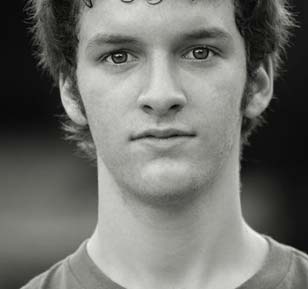 |
| Erik, star of "Channeling Erik" |
 |
| Dr. Medhus |
But I came across this clip on youtube yesterday, and I felt I had to share it.
In the clip, Erik introduces his mom to two people; Quentin Crisp, the author of "Naked Civil Servant," and none other than Jesus. Now, like any Catholic raised fellow, I'm skeptical about accounts of people seeing Jesus - accounts of seeing him are done usually by people having a near death experience (Todd Bumpo's NDE in "Heaven is For Real" is one) and people usually stop thinking or asking questions about him after they run into him. "I saw God" is about all they can remember.
 |
| Naked Civil Servant, Quentin Crisp, note Jaimie Butler's description of him |
In this interview, done with Jaimie Butler (withloveandlight.com) she describes his appearance - the same as June's description.
Jesus goes on to describe some pretty amazing events. That he survived the Crucifixion. I've researched this quite a bit - Joseph of Arimethea asked for his "living body" off the cross, and Pilate replied "you mean his corpse" - in this he says it was with the help of the Roman guards that he was able to pull off a Tibetan yogic trick of appearing to be dead. (see wiki Pratyahara)
I've been to the monastery in Hemis where he learned it. I was told by the Abbot of the monastery that Jesus had studied there. I thought I was hearing him wrong. Then I looked it up - "Jesus in India" - and he references the trip - which followed the silk road. He went to Persia, later what is now Pakistan where he studied with the Jains, was nearly killed by Brahmins who didn't like his "everyone is equal" preaching - and wound up in Tibet - which is now part of northern India in Ladakh. It's all detailed in the "Tibetan gospel" which has been translated by two people - Nicholas Notovitch and an Indian pandit who translated the same document - which tells the accurate story of Jesus traveling to India BEFORE he went to Jerusalem.
 |
| Main courtyard of Hemis, located along the Silk road, monks here say that Jesus spent a number of years studying Buddhism here. |
So when Jesus says in this clip that he survived the Crucifixion - and he did it with using a yogic practice of slowing the body's heart rate - I can tell you that I've heard that same account before, and I'd be hard pressed to believe anyone else has done this research - as I can't find it anywhere. I had never heard that the Roman guards were in on it - I do know that Joseph of Arimethea is a logical candidate for pulling it off. (and for those skeptics out there - check out the last sentence of the four gospels - it appears to have been written by the same author, who was most likely based in Rome, where the Gospels appear to be artfully rewritten to suit the Roman tastes).
 |
| From the shroud - which he says "is him" |
He also talks about "right and wrong." He's trying to explain why he wants people to understand that it's wrong to use his words and legacy to punish or hurt other people. Erik, the Dr's son, pipes in "but there is no right and wrong." And Jesus replies "you have to teach people what is right and what is wrong, before you can teach them that there is no right and wrong." And what he means by that is "relative" right and wrong. Meaning if it doesn't come from the heart, then it's wrong. But there is forgiveness, and compassion - and loving your enemy, turning the cheek, loving your neighbor as yourself - because inherently there is no good or bad in the afterlife.
Certainly we live in a planet of polarity - yin and yang, dark and light - and that allows us to examine these energies in our lifetime. But between lives, we don't see these actions here as good or bad - just relatively good and bad - the way you might consider a play "bad" or "good." We watch the events here like sitting in a theater, as we act out our lives - we are able to see that "bad characters" bring out the good in people - so they have their place and purpose. It just depends what kind of drama you want to experience while you're here. Some think they can handle what roles they sign up for - but then realize, or believe they can't. They sign up to experience courage or selflessness, and can't handle it. So teaching that there is no inherent right or wrong, can't be taught until it's learned that compassion and love are the paradigms to reach for, and once you realize every action is about learning compassion, then the fear associated with right or wrong falls away. At least that's my humble interpretation of it.
And finally, he says that he's currently on the planet, living in India. I can think of a few candidates - but either way, this is not a story about worship, about finding Jesus - he said his mission on the planet was to teach people about the Afterlife. That he regretted people not knowing that he survived the Crucifixion, but realized (from the between lives realm) that is was more powerful of a statement when people believed that he had died and gone to Heaven. But he also points out the Bible is metaphor - stories written by people to describe their own relation to God, and not the other way around. And as such, written as a tool, and not as a weapon.
He also takes to task (if it can be called that) those who use his words out of context. He clearly states that he loved everyone unequivocally - without prejudice - and that includes EVERYONE.
For me, it follows with the session that I filmed recently where a person asks their spirit guide (guardian angel) "Who or what is God?" And the guide answered "God is beyond the capacity of the human brain to comprehend. It's just not physically possible. However, if you want to experience God, open your heart to everyone and all things." It bears repeating: Open Your Heart to Everyone.
Not just those who love you. Those you like. Those who like you in return. Open your heart to everyone. And all things. The planet. What we're doing to it. To the people you meet in the street. To the guy who cuts you off in traffic. To terrorists. To those in need.
So what's the point? He says that in the next four years, we will be able to bridge this link between us and the Afterlife, and that it will change everything - our way of business, of teaching, of taking care of the planet.. and he clearly says it will be through an "Invention" - even those Elisa adds "science" - he said an "invention" to bridge the gap. So my mind is racing - what Invention is that? Something that will allow us to pick up those vibrations that mediums or psychics receive and translate them into words? A "Twilight Zone" telephone that will speak to our departed ones in the afterlife? If what I'm saying is true, then why not?
A call to action for all your inventors out there! Tesla, are you listening?
My two cents.
Sunday
Flipside talk at the Owl's Lantern in Fullerton
Giving another book talk this week at the Owl's Lantern in Fullerton California.
The Owl's Lantern
 FLIPSIDE: A JOURNEY INTO THE AFTERLIFE
The Owl's Lantern
 FLIPSIDE: A JOURNEY INTO THE AFTERLIFE
with Richard Martini
Saturday, March 16
7 pm to 10 pm
$10 suggested donation (no one turned away for lack of funds)
Richard Martini, author and award-winning filmmaker, will talk about his most recent book and documentary, Flipside: A Journey into the Afterlife. They’re based on new evidence for life after death, via the “life between lives,” where we reportedly return to find our loved ones, soul mates and spiritual teachers and learn that life choices appear to be made in advance and why souls choose difficult lives. Please sit back and relax, allow Rich to guide you on this unusual trip into another realm! Copies of the book (Flipside: A Tourist’s Guide on How to Navigate the Afterlife) and the DVD will be sold at this event! $20 per item or $30 for book and DVD.
I gave a talk at my favorite church in Santa Monica a month ago, and finally have been able to post it. It's 90 minutes - enjoy!!!
Rich
Tuesday
Flipside in print at a bookstore near you...

Public Talk in Santa Monica
Finally! I get to talk about my book in my hometown by the bay; Santa Monica.
UPDATE: "Flipside" book talk and general merriment Friday the 25th of January, 7 pm, there will be chili served! First Presybeterian is an amazing venue, amazing church to have a public talk, very progressive, compassionate folks. Books & DVDs available for purchase. Come see why this book went to #1 on Amazon (kindle in its genre, 9-21). If you have questions about what thousands have said under deep hypnosis about the afterlife, are just curious, or furious, come on down and take the red pill. Book hits Barnes & Noble in Print on 2-28. http://fpcsantamonica.org/directions_parking.html

It's Friday January 25th at First Pres Church at 7 pm.
This is not for the faint of heart.

I'm a huge fan of Rev. Wood, who oversees one of the oldest flocks in California - not that the people are old, but the church is. Nestled on 2nd street between Arizona and Wilshire, our kids had the unique experience of going to the pre-school here - one of the best reviewed in .. well, it's a good school.
The wonderful Dr. Mary Hartzell runs the program. She's an amazing child psychologist and author. I will be telling a funny story during the talk which I'll repeat here.
While I was filming "Flipside" or at least starting my research into it, I had been reading Carol Bowman's "Children's Past Lives." Carol is someone who studied with Ian Stevenson at the University of Virginia, and has become a Michael Newton trained hypnotherapist. She's the author of a number of books, and is frequently seen on shows about past life regressions. Carol and Jim Tucker (who is carrying on Ian Stevenson's work at UVA in reincarnation from a scientific perspective) both assisted the child who was featured on ABC who clearly remembered a previous life as a WWII pilot. The father has written a book - he was a skeptic, but with the help of Tucker and Carol, they were able to research and find out the accuracy of what his child had reported.
 |
| A couple of First Pres students related to me |
One of the women raised her hand and said "My son claims that he died in Africa. He's been repeating this story for awhile now. What do I tell him?"
Dr. Hartzell smiled and said "Well, most likely he was watching a television show about Africa." The woman said that couldn't be the case as they monitor what he watches, and there'd been no show that was anywhere near what he was describing. I raised my hand and said "Well.. actually.. there's quite a bit of evidence of children remembering past lives. Carol Bowman and others have reported them recently. The children seem to be able to remember events up to around the age of seven."
Dr. Hartzell smiled and said with a wave of her hand, "Oh Richard, you're just making that up for another screenplay."
 |
| On the set of my film "My Bollywood Bride" |
Well, not really. Again, as I'm fond of saying (to anyone who will listen) I'm not making this information up. It's not a philosophy, or based on anyone's belief system. It's based on what people report - eyewitnesses if you will - say about their journey into what can only be described as the Afterlife. And they're remarkably uniform - despite age differences, cultural differences - it doesn't matter what gender, what religion or what background they are. THEY ALL SAY THE SAME BASIC THINGS ABOUT THE AFTERLIFE.
 I began this project, wanting to make a documentary about the Afterlife from a spiritual perspective, with a number of points of view. When I came across Michael Newton's work ("Journey of Souls") I realized that if what he was saying was true, it was revolutionary. I set about to either disprove or prove what he claimed; that 7000 of his clients said the same things about the afterlife during a deep hypnosis session, before he'd published his first book. So I chose 15 different subjects and filmed them under deep hypnosis. And remarkably; the confirmed his research. There are interviews with a number of hypnotherapists who practice his technique - who are now in many countries around the world. (You can find a Michael Newton trained therapist near you at NewtonInstitute.Org). This is not past life regression - this is way beyond that, where a person gets to see why they chose their previous lives, why they chose this life and what the two have in common. Pretty profound.

The church is one of those wonderful places that opens its doors to all kinds of points of view. (I saw the Buddha's relics here not too long ago). But I will likely touch upon how this research, while appearing to be contrary to Church Dogma, actually underlines, heightens and allows a deeper interpretation of spirituality, no matter what your belief is.

 |
| Old pic, but it will do. |
Thursday
Happy 2013 from Flipside
I mention in "Flipside" how the Tibetan meditation of Tonglen has proven effective in treating depression (Richard Davidson, U of W).
Here's a description of it from Pema Chodren from her book "Tonglen: The Path of Transformation." Practicing it affects the amygdala, source of depression in the brain. By opening your heart to others, you heal yourself.
 |
| Happy New Year in Malibu |
Worth sharing: http://www.ecomall.com/greenshopping/tonglen.htm
Here's an excerpt:

BY PEMA CHÖDRÖNThe following is an excerpt from Tonglen: The Path of Transformation, by Pema Chödrön, Vajradhatu Publications.The everyday practice is simply to develop a complete acceptance and openness to all situations and emotions, and to all people, experiencing everything totally without mental reservations and blockages, so that one never withdraws or centralizes onto oneself.
-Chögyam Trungpa Rinpoche
Chapter 1
TONGLEN IN DAILY LIFE
All sentient beings without exception have bodhichitta, which is the inherent tenderness of the heart, its natural tendency to love and care for others. But over time, in order to shield ourselves from feeling pain and discomfort, we have erected solid barriers that cover up our tenderness and vulnerability. As a result, we often experience alienation, anger, aggression, and a loss of meaning in our lives--both individually and on a global scale. Somehow, in the pursuit of happiness, we have unwittingly created greater suffering for ourselves.
Tonglen, or the practice of sending and taking, reverses this process of hardening and shutting down by cultivating love and compassion. In tonglen practice, instead of running from pain and discomfort, we acknowledge them and own them fully. Instead of dwelling on our own problems, we put ourselves in other people's shoes and appreciate our shared humanity. Then the barriers start to dissolve, our hearts and minds begin to open.
Before presenting the formal practice of tonglen, I would like to discuss a few ways that you can begin to incorporate the tonglen outlook into your daily life. After all, how you lead your life-- with maitri and compassion for both yourself and others--is really the point. What's more, if you train in the outlook on a daily basis, you will find that the formal practice comes much more naturally.
Trungpa Rinpoche used to tell his students to live their lives as an experiment. In other words, be inquisitive, be open and without expectations, then see what happens and learn from your experience. For this reason, I often suggest that students chose a limited amount of time--say, three months or a year--to work with the tonglen approach, just to see how it affects their lives. But don't think that you will be able to perfect the practice in such a short time. Tonglen is really a practice for the rest of your life.
Sitting Meditation
Practicing sitting meditation, or shamatha-vipashyana, a little bit every day is a good way to start training in the tonglen attitude. It's a way of checking in with your state of mind, like holding up a mirror to yourself. Sitting cultivates both absolute and relative bodhichitta. As an absolute bodhichitta practice, it teaches us not to grasp at thoughts and emotions as solid. As a relative bodhichitta practice, it teaches us maitri and compassion for ourselves.
In general, it's not a good idea to start doing the formal tonglen practice until you have a good grounding in sitting meditation. You especially need to cultivate steadfastness, the courage and patience to sit with whatever arises during meditation. Otherwise, you might be knocked off your cushion by the emotions that tonglen provokes. For that reason, it is always suggested that you begin and end with sitting meditation whenever you do tonglen.
Even if you're not on a cushion or in the meditation hall, you can experiment with the practice of mindfulness and awareness. You can use it as a tool to get in touch with what you are feeling in the present moment. For example, sometimes when I am alone or find myself in a quiet setting--taking a walk in the woods, gazing out my cabin window, or sitting on a bench by the ocean--I let go of my thoughts and try to see what lies underneath them.
Actually, this is the essence of mindfulness practice: always coming back to the immediacy of your present experience and letting go of thoughts and judgements about it. You will probably discover there is something that remains after you drop the thoughts and the story lines. What's left is the immediacy of the sense perceptions--sight, smell, touch, and so on--as well as a feeling or mood.
For example, perhaps the feeling underneath your thoughts is self-hatred. Consequently, when thoughts begin to bubble up, they sound like "bad, bad; good, good; should, shouldn't." When you become aware of such thoughts, you just let them go and come back to the immediacy of your experience. This in itself is the practice of maitri, or making friends with yourself.
Making Aspirations
I am a big fan of making aspirations. I think they are very helpful on our path, because they help us to stay in touch with our motivation to develop bodhichitta. The lojong slogan, "Two activities: one at the beginning, one at the end," suggests beginning and ending each day by reaffirming your motivation to dissolve barriers, to open your heart, and to reach out to people. When you wake up in the morning and go to bed at night, you could make an aspiration. You could use your own words or repeat a traditional aspiration, such as the Four Limitless Ones or the Bodhisattva Vow. (Refer to the "Daily Chants" section on p. 124.)
Sometimes you may feel that the formal practice of tonglen is too much for you. In that case, you could simply make the aspiration: "One day may I be able to open my heart a little more than I can today." With this approach, there is no blame or self-recrimination. There is just a sincere wish to grow.
Equality Practice
Equality practice is a way of connecting with others and realizing that you and they are in the same boat. It is a simple human truth that everyone, just like you, wants to be happy and to avoid suffering. Just like you, everyone else wants to have friends, to be accepted and loved, to be respected and valued for their unique qualities, to be healthy and to feel comfortable with themselves. Just like you, no one else wants to be friendless and alone, to be looked down upon by others, to be sick, to feel inadequate and depressed.
The equality practice is simply to remember this fact whenever you meet another person. You think, "Just like me, she wants to be happy; she doesn't want to suffer." You might choose to practice this for a whole day, or maybe for just an hour or fifteen minutes. I really appreciate this practice, because it lifts the barrier of indifference to other people's joy, to their private pain, and to their wonderful uniqueness.
In The Way of the Bodhisattva, the great Indian teacher and poet Shantideva stresses the importance of meditating on the equality of self and others in this way:
Strive at first to meditateJeffrey Hopkins, the Dalai Lama's translator for ten years, tells a story about travelling with him in the West. Wherever he went, His Holiness would repeat in English, "Everyone wants happiness, doesn't want suffering." He would go to an airport or a lecture hall or a news conference and say, "Everyone wants happiness, doesn't want suffering." At first Jeffrey thought, "Why does he keep saying this?" because it seemed so simplistic and ordinary. But after a while the message began to sink in, and he thought, "Yes, I need that!" It is simple, but it is also profoundly true, and it was exactly the kind of teaching he needed to hear.
Upon the sameness of yourself and others.
In joy and sorrow all are equal.
Thus be guardian of all, as of yourself.
At first, this practice might seem commonplace or shallow to you. But believe me, it's a real eye-opener. It humbles us, because it shines a spotlight on our habit of thinking that we are the center of the world. When we acknowledge our shared humanity with another person, we connect with them in a surprisingly intimate way. They become like family to us, and this helps dissolve our isolation and aloneness.
Sharing Your Heart
The practice of sharing your heart is twofold: sharing happiness and accepting pain. For the first, when anything is delightful in your life, you wish that other people could share it. For the second, when you feel any sense of suffering, you think that many other people are also suffering and you wish that they could be free from it. This is the very essence of the tonglen outlook: when things are pleasant, think of others; when things are painful, think of others. If this practice is the only thing you remember after reading this book, it will benefit you and everyone you come in contact with.
Sharing Happiness
When you experience any kind of pleasure or well-being in your life--appreciating a bright spring day, a good meal, a cute baby animal, or a nice hot shower--notice it and cherish it. Such simple pleasures can bring us a lot of joy, tenderness, and a sense of relief. We have many of these fleeting golden moments in our life, but we usually speed right past them. So the first part of the practice is just to stop, notice, and fully appreciate them. Next, you make the wish that other people could also enjoy them. As you do this practice more, you will probably find yourself noticing these moments of happiness and contentment more and more.
When you practice giving in this way, you don't bypass your own pleasure or enjoyment. Say you're eating a bowl of delicious strawberries. You don't think, "Oh, I shouldn't really be enjoying these so much. Think of all the other people who don't even have a piece of bread to eat." Instead, you should think, "Wow! This is a fantastic strawberry. I've never tasted anything so delicious." You can enjoy your strawberry thoroughly. But then you think, "I wish everyone could enjoy this, I hope that they will have a chance to enjoy this too."
You could also think of a personal possession that gives you a lot of pleasure, such as your favorite sweater or your favorite tie, then imagine giving it away to people you meet. This practice isn't about actually giving anything away, because you are working at the level of imagination. But it puts you in touch with your habit of grasping, shutting down, and not wanting to share things with others. In the process, you develop confidence in your own inherent richness, that fact that you always have a lot to give others.
Treya Wilbur described this kind of giving practice in the book Grace and Grit, which is about her battle with terminal cancer. She had already been doing tonglen for a long time. One day she lost a gold star necklace that her parents had given her, which was like a good-luck charm because she had worn it through all her most difficult times, chemotherapy and operations. When she couldn't find it anywhere, it seemed like a bad omen and she became depressed. But based on her experience of tonglen, she suddenly got the idea of visualizing millions of these stars and giving them away to benefit everyone she met. During the process of practicing in this way, she became acutely aware of her habitual patterns of desire, attachment, and clinging, and she began to give away anything for which she felt a momentary attachment. This didn't always help her to overcome her clinging, but through this work she developed compassion for everyone else like her who had good intentions but couldn't quite live up to them. Through this practice that she discovered through her own insight, she was able to get over losing the star and, most importantly, learned the joy of dropping attachment and giving to others.
Accepting Pain
The second part of the practice is somewhat more advanced. So don't try it unless you feel comfortable with the idea. First you notice when you experience something that is uncomfortable, painful, or unpleasant. Then you make the wish that other people could be completely free of it and imagine sending them whatever you think would bring relief.
For example, if you start to feel depressed, you say to yourself, "Since I'm feeling depressed anyway, may I accept it fully so that other people can be free of it." Or, "Since I have a toothache anyway, may I accept it completely so that other people may be free of it." Then send them a sense of relief. Just do it very simply, without worrying too much about the logic. For many people, this kind of exchange will seem like too much, too soon. But I present it anyway, because I have personally found it very empowering. It turns around the revulsion and paranoia that we normally feel about anything unpleasant, the feeling that we are the target, and we use it as fuel for awakening the heart.
"Traffic jam tonglen" is a specific instance of this practice. It's about working with all the uncomfortable feelings that you experience when you are stuck in a traffic jam, or perhaps in a very long line at the market: anger, resentment, restlessness, uptightness, fear of missing an appointment. First you look around and realize that all the other people stuck in the jam are feeling the same way you do. Then you breathe in fully whatever you are feeling and send out a sense of relaxation and relief, both for yourself and all the other people in the traffic jam. You realize that, as human beings, you are all in the same boat. Everyone is putting up barriers and using the discomfort of the traffic jam to feel more and more isolated. So you turn the situation around, and it becomes your link with all the other people stuck in their cars. Suddenly, as you look out the window at them, they all become human beings.
Tonglen On the Spot
This practice is really the essence of the tonglen approach. Because I have found it very helpful for myself, I like to recommend it to all my students. Even if you choose not to do the formal tonglen practice, you can always do this on-the-spot practice. Once you get used to it and practice it regularly, it will make formal tonglen practice more real and meaningful to you.
This is a practice that you can do for a real-life situation you meet in daily life. Whenever you meet a situation that awakens your compassion or that is painful and difficult for you, you can stop for a moment, breathe in any suffering that you see, and breathe out a sense of relief. It is a simple and direct process. Unlike the formal practice, it does not involve any visualizations or steps. It's a simple and natural exchange: you see suffering, you take it in with the inbreath, you send out relief with the outbreath.
For example, you might be in the supermarket and see a mother slapping her little girl. It is painful for you to see, but there is really nothing you can say or do at that moment. Your first reaction might be to turn away out of fear and try to forget it. But in this practice, instead of turning away, you could actually start to do tonglen for the little girl who is crying and also for the angry mother who has reached the end of her rope. You can send out a general sense of relaxation and openness or something specific, like a hug or a kind word, or whatever feels right to you at the moment. It's not all that conceptual; it's almost spontaneous. When you contact a painful situation in this way and stay with it, it can open up your heart and become the source of compassion.
You can do tonglen on the spot when strong emotions come up and you don't know what to do with them. For example, you might be having a painful argument with your spouse or your boss at work. They are yelling at you and you don't know how to react. So you can start to breathe in the painful feelings and send out a sense of spaciousness and relaxation with the outbreath--for yourself, for the person who is yelling at you, and for all the other people who are dealing with a similar difficult situation. Of course, at some point you have to react to the person who is yelling at you but, by introducing some space and warmth into the situation, you will probably deal with it more skillfully.
You can also do this practice when you feel some blockage to opening and developing compassion. For example, you see a homeless person on the street who is asking you for money and seems to be an alcoholic. In spite of your desire to be compassionate, you can't help but turn away and feel disgust or resentment. At that point, you can start doing tonglen for yourself and all the other people who want to be open but are basically shut down. You breathe in the feeling of shut-downness, your own and everybody else's. Then you send out a sense of space or relaxation or letting go. When you feel blocked, that's not an obstacle to tonglen; it's part of the practice. You work with what feels like blockage as the seed of awakening your heart and as connection with other people.
Tonglen On the Street
This practice is to walk down the street, perhaps for just one or two blocks, with the intention of staying as open as possible to whoever you meet. It is a training in being more emotionally honest with yourself and being more emotionally available to others. As you are walking, you could relax your posture and have the feeling that the area of your heart and chest is open. As you pass people, you might even feel a subtle connection between their heart and yours, as if the two of you were linked by an invisible cord. You could think to yourself, "May you be happy," as you pass them. The main point is to feel a sense of interconnectedness with all the people you meet.
If you are feeling somewhat exposed and embarrassed by doing the practice, just acknowledge it and realize that other people are probably feeling the same way. You may notice how people glance briefly at you as they approach--usually at a safe distance, so it isn't obvious--in an automatic gesture of reaching out. Perhaps they are looking for someone who would be friendly to them and say hello, someone they could genuinely connect with. Sound familiar?
As you encounter each person, acknowledge your thoughts and emotional reactions toward them. Notice if you feel a sense of attachment, aversion, or indifference toward the people you pass. But don't add any self-judgement on top of it. You might see someone smiling, which could cheer you up on the spot and make you open further. Or you might see someone looking depressed, which could spark feelings of tenderness and compassion.
Notice when you begin to shut down or open up. But if you do find yourself shutting down, you don't blame yourself. You can simply empathize with all the people who are shutting down in the same way and aspire to be more and more open. Also, if you feel a sense of delight or pleasure on your walk, you could wish to share it with the people you meet.
Stepping Into Others' Shoes
This practice of exchanging yourself with others is presented in Shantideva's The Way of the Bodhisattva. It is more of a contemplation and, unlike tonglen, it isn't synchronized with the in- and outbreath. It can help you open up to, and empathize with, the so-called neutral or indifferent people in your life, as well as those you find really difficult.
First imagine the person you are working with as vividly as possible. Be very inquisitive and spend some time really trying to stand in their shoes and see the world as they do. What do they feel? What do they want? What do they fear? Just taking this much interest in a person can go a long way in developing appreciation and concern for them.
To take it a step further, think that you are them and they are you. You are standing in their shoes and you are now looking at yourself as the other person sees you. How do they see you? As just a neutral person, as a potential friend, as an enemy, as an arrogant person, as a warm person? What would they like for you to give them: a hug, an encouraging word, an open and attentive ear, appreciation for their intelligence and their talents, an apology, forgiveness?
By trading places, you discover that what the other person wants is pretty much the same as what you want. In that way, you are equals. Perhaps you also discover that you have never really seen them or heard them before, that you haven't appreciated them or treated them fairly. Based on this new understanding, you may open to them more the next time you see them.
The above is an excerpt from Tonglen: The Path of Transformation, by Pema Chödrön, Vajradhatu Publications. For further information about Vajradhatu Publications and a catalogue of dharma books, videos, and audio tapes.
Subscribe to:
Posts (Atom)
GoodReads
