Its A Wonderful Afterlife and Flipside Available Through Barnes & Noble; Amazon

The books are available through Amazon as a kindle or softcover. Click this link here to find it ON SALE!!! FLIPSIDE: A TOURIST'S GUIDE ON HOW TO NAVIGATE THE AFTERLIFE or here AT AMAZON IN PAPERBACK. AND FINALLY!!! IT'S AVAILABLE IN PAPERBACK AT BARNES AND NOBLE!!! THANK YOU!!
BARNES AND NOBLE'S FLIPSIDE The Film FLIPSIDE is now available at Gaiam.TV and Amazon
Showing posts with label flipside. Show all posts

Thursday

Coast to Coast highlight about Harry Dean Stanton


It's always a treat to be invited onto Coast to Coast radio.

This interview was after Harry Dean Stanton passed away, and Jennifer Shaffer and I had a chat with him about his arrival on the flipside.  Harry Dean was famous for being a skeptic and atheist - but he has some funny things to say about his arrival over "there."

Here's the book "Backstage Pass to the Flipside: Talking to the Afterlife with Jennifer Shaffer" 

Jennifer Shaffer, medium extraordinaire


And as an addendum to this post:

someone asked me online:
"So when will you tell me about Art Bell in afterlife, it was a request made on Coast to Coast with George Noory"

Indeed, I remember one of the callers asked a question about Art Bell - I didn't know Art, but he did reach out to me about appearing on his radio show after hearing me on "Coast to Coast" (a show he created) which I did with his Heather Wade (and posted below).   


"You led us to believe you could talk to the dearly departed, I will bring this up on Coast to Coast during open lines, I am sadly sorry you sound like a fake, I thought maybe you were real."

To be clear; I don't speak to the afterlife; I film people who do. Mediums who work with law enforcement agencies, people using four to six hour hypnosis or guided meditation. All of my filmed sessions either become transcripts or films one can find on Amazon Prime or Gaia.
Recently at the CONTACT IN THE DESERT event, I met Whitely Streiber (author of "Communion") I told him about this conversation with Art Bell, and how Art said that he was "playing cards with Whitley's higher self but Whitley isn't aware of it."  Whitley said to me "I've never played cards with Art, but not that you say this, it feels oddly accurate."

I'm just reporting.

Wednesday

Luana Anders speaking from the flipside


Speaking of Luana


Luana portrait by Monte Hellman

Luana Anders popped onto my facebook page this morning. 

Could have been an algorithm, could have been because Jennifer and I were chatting with her YESTERDAY.  

Jennifer Shaffer and I meet up weekly, I film our interviews, and for fans of our work, Luana is the "holder of the backstage pass" (as dubbed by Tom Petty during a session) that allows us to speak to various individuals who still want to communicate with their pals back on the planet.  (If I know the family of the person involved, I reach out to them the best that I can, if I don't, I'll post something on their instagram page or social media page, figuring if their loved one on the flipside has the ability to tap their shoulder, they'll point to it and say "that's from me.")  

If they don't see it, or don't believe it, that's fine - as I'm fond of saying "Not everyone signs up for a lifetime where they know how the play ends."  It's okay to believe that life ends at death, but as Harry Dean Stanton said to us (in the 2nd chapter of the first book) "Believe in the possibility of an afterlife, then you won't spend any time like I did arguing about it."

(Harry had a number of verifying, validating things he said during his interview, which has been mentioned here in earlier posts, but suffice to say, I knew him, knew who he was talking about, and the friends he asked me to reach out to, all were going through exactly what he observed from the flipside.) 

In honor of those we've chatted with I try my best to let their loved ones know they AREN'T GONE, THEY'RE JUST NOT HERE. They still exist, albeit on a different wavelength but still want to stay in touch with them. (We were given a simple formula for folks to use on their own; 1. Say their name. 2. Ask your questions 3. When you hear the answer before you can form the question you'll know you have a connection. (I'm told saying their name, looking at a photograph, listening to their voice is a way of "strengthening the signal.") 

In honor of Luana and her continuing help with navigating the flipside, here's the Foreword from our book "Backstage Pass to the Flipside; Talking to the Afterlife with Jennifer Shaffer."  Might as well have Luana's name in the title - she's doing the same work that Jennifer is doing, only on the other side.   


FOREWORD FROM 

"Backstage Pass to the Flipside: Talking to the Afterlife with Jennifer Shaffer" by Luana Anders
  
My and Luana in Rome, laughing and having cappuccinos. For fans of "Flipside"
this is the photo that was on my fridge when James Van Praagh said live on air
on the Charles Grodin show "You have a photograph on your refrigerator that is the
essence of your relationship" - the same words I said when I put it up after her passing.


"Forewords are an unusual introduction to the material inside a book. In “Flipside: A Tourist’s Guide on How to Navigate the Afterlife” Harvard PhD Gary Schwartz offered to write the foreword, where he said that “self science” was something Einstein had done, and he felt my “journey into the Flipside” should be considered as part of that canon.


In “It’s a Wonderful Afterlife volume one” Charles Grodin suggested in his foreword that he didn’t quite know what to make of my forays into the afterlife but enjoyed my passion for them. In Volume two, Galen Stoller, a young man who passed away some years ago wrote an eloquent foreword from where he is now, detailing what he wanted to impart about the journey. “It is a wonderful afterlife,” he wrote (via a medium), “but only because “it is wonderful to be alive.”

I suggested my pal and compatriot in this endeavor medium/intuitive Jennifer Shaffer should write the foreword, as she’s the conduit for this research. But while we were discussing this, Luana Anders, my friend and inspiration for this journey (who passed in 1996 after our being best friends for 20 years), suggested (through Jennifer) that she wanted to write her own foreword to this book.

(Note: Luana, besides being an actress who appeared in 30 features (including “Easy Rider”) also appeared in 300 TV shows. Her film writing credits include “Fire On The Amazon” and “Limit Up” written with yours truly.) At some point in this book, she suggested I try “automatic writing.” I sat in front of the keyboard, put my fingers on the keys and thought; “Type whatever comes to mind.” I opened myself up to the possibility I could write something on her behalf:)


Tom Pittman who took this photo, was an actor and contemporary of Luana's, but died in a car
accident like James Dean - Tom was wearing the same jacket and driving the same
Porsche as Dean when they found him up on Mulholland Drive in the 60's.

“First, let me be clear. Richard is not talking through me. I am talking to him through Jennifer (usually). She does her best to make it easy for him to understand what I’m trying to say, and I’m doing my best to make it easier for him to understand. But it is leaning in from both sides.

(Note: Like the 11:11 example Luana cites later in the book.)

At the moment, Richard is typing this sentence and has put his mind on virtual hold (he claims it’s a meditation technique) to allow “me” to take over his typing. Some people call this “automatic writing.” Doesn’t mean it’s any good. It just means it’s automatic. No brain stem involved.

I’d would like to point out that chanting “Nam Myoho Renge Kyo”* saved my life. I know that Richard used to tease me about it, make fun of it – and I’m grateful for that because it allowed me to laugh about it as well.

(Note: Luana would do her “daimoku” (“Nam-myoho-renge-kyo” prayer) in the car on the way to an event. She’d chant at lightning speed, decades of practice, which sounds a bit like “homina homina munya homina.” I would imitate her and she couldn’t help but laugh. Chanting helped her navigate her fear of parties. Luana was an incredible listener, and on more than one occasion, I’d leave her for ten minutes at some tony event, come back to find a close friend sobbing, pouring out his/her life to her. She had incredible compassion, even as a listener.) (*SGI/NSA Buddhist chant.) (You can see her chant in the film "The Last Detail" in a scene with Randy Quaid.)

But it saved my life. I never would have made it as long as I did on the planet without being able to focus on something else so dear to me. Saving humanity by chanting about it. If you’re not familiar with it, if you’re suffering, I recommend it as a form of meditation and healing. You pray for someone else and you are healed. Simple as that.

I suggested that I write the foreword to this book because after all, much of it is about me – and I have little to say in the matter. Believe me, it was as shocking to me as it was to my class to have him (Richard) appear as he did – willy nilly – in front of my classroom over here. He just started speaking out loud as if was completely normal that some ghostly avatar would appear in front of our class and start blathering away about his “research.” **

(**Note: It was during my first deep hypnosis session where I found myself standing in her classroom, interrupting it. Everyone turned in shock as I appeared. She looked at me as if to say “WTF?” She looked about 20 years younger than when I knew her – at least 10 years before I met her. She looked embarrassed to see me standing in the class talking – but I continued to speak. (as reported in Flipside))

But I applaud him for it. He’s got cojones this boy. I can call him a boy – because I know him better than most. He’s endearing... to me and to others. But at his core, he’s that little boy that I’ve known for a long, long time.


Me and Luana around the time we met at USC
assigned to the same screenplay for a script class.
It’s important work that he is doing, important work that he and Jennifer are doing. To help us communicate with all of you back there on the planet, and to open up people’s minds about the ability to do so. It’s happened not because of any great cataclysmic event that’s in the offing – it’s happening because it’s time. It’s time to shift consciousness, to shift gears to understand the nature of reality.

It’s going to upset some people, but we’re on top of that as well. It’s going to liberate most people. Help most people. And ultimately turn out to be completely accurate when others figure this process out.

Some may ask “Why now?” Some may ask “Is this a good thing to do to communicate with our elders and loved ones who’ve gone on?” Well, we still have things to communicate to you, we still have thoughts, dreams, feelings and hope for humanity – because we consider ourselves part of your journey as well. You may not think of us that way – but we think of you that way.

So please, allow me to offer this small token of appreciation for the fellow who is typing this sentence. Yes, you are a goofball Richard, you are someone that has vexed and frustrated me during my life, but also during other lifetimes.

But you also taught me how to laugh, how to let go, and how to be more of myself while I was on the planet. I know what my path was about, I know why I had to depart early – eventually you’ll come to know these reasons as well. Suffice to say it’s okay not to “know everything” or “why everything happens” but it is good to trust in the idea that they do “happen for a reason.”

And let’s focus on that for a moment – “focus on reason.” What is reasoning? Taking the evidence presented in front of us, and trying to figure out what it means and how it can help me in my journey. We reason things out because that’s what we do with our minds... we also can go “beyond reason” and allow things to happen to us, or for us... and that’s how I want you to consider what you’re about to read. That this goes “beyond reason.” And there’s a reason for that as well.
Circa Dementia 13 in the 1960's.
Okay, I’m telling Richard to stop now – and to let our mutual friend Jennifer go over this text and see what “resonates” or rings true for her. After all – it’s those “feelings of resonance” when we get a shiver of truth, or when we get a feeling that we’re actually learning or talking about something that’s beyond our logic and thought, beyond our mind... that we truly are able to learn things... about the nature of reality and about the nature of ourselves. I’m fortunate because Richard can type at the speed of thought – I’m watching him do this as we speak, and I suggest a plethora of ideas and he’s able to blast them onto the page.

One more thing about love. I love you all. I’m not just saying that as a phrase – but I want you to really feel what I’m saying. I LOVE YOU. I send my heart and soul and unconditional love to you who are reading this sentence. I hope and pray that you receive this love because love is what moves this universe, it is the giant engine of who we are, it’s what or who God is, it’s what or who we are. If you can wrap your mind around love – that’s great – if you can’t, that’s okay too, just open your heart up to the idea of it.

Love yourself. Love your neighbor. Love your enemy. Love the idea of love, of creating love, or spreading love of being loved and giving it in return. That’s about all I have to say on the topic except... “See you on the flipside.” (To quote a corny phrase too often used by a close friend of both of ours.)

PS: (It’s) Just a few days after my birthday – I would have been xxx age in your realm – but over here – not such a big deal. Which I prefer. Enjoy the cake."

Written (as if channeled) by Luana Anders (Foreword from "Backstage Pass to the Flipside: Talking to the Afterlife with Jennifer Medlyn Shaffer")

Here's Luana with Mick Gough when
they did Broadway together in the 1960's.
We spoke to this pal of hers yesterday. Michael Gough (original Batman's butler)
Luana and I went to see Mick in "Breaking the Code" on Broadway,
on our way backstage to find him, we walked across the pitch black stage
and stumbled into him. This photo taken a few minutes later.


Thursday

#1 in its genre at Amazon Backstage Pass to the Flipside


ALREADY #1 AT AUDIBLE IN ITS GENRE:


(Funny, audible recently switched the genre to "unexplained phenomena" - so it's just a hot new title rather than #1. They also had put up the wrong title - not "it's a wonderful afterlife" but "Backstage Pass to the Flipside" which is fixed below.) 

Here are links to BOOK ONE and BOOK TWO for "Backstage Pass to the Flipside: Talking to the Afterlife with Jennifer Shaffer."


 BACKSTAGE PASS TO THE FLIPSIDE: "Talking to the Afterlife with Jennifer Shaffer Part One" is now available here:


Book One explains the process of obtaining these "interviews from people on the Flipside." Jennifer Shaffer is a renowned medium/intuitive who works with law enforcement in the US to help find missing persons. Richard Martini is a best selling author who either knew the people they seek to interview, or their class moderator Luana Anders (on the flipside) helps moderate the discussions. 

Each chapter is an exploration of what is said, research is done to verify details that are heard, and observations of the process are made. The following are just a sampling of some of the people "accessed" via this process. 

Backstage Pass to the Flipside: Talking to the Afterlife with Jennifer Shaffer part one interviews: 

1 - "A Class in Translation" The genesis of the classroom model for chatting with the flipside. 

2 - "Open yourself up to the possibility" Atheist and actor Harry Dean Stanton proves he's on the flipside. 

3 - "The Concierge of Connectedness" Part 2 of Harry Dean's interview after his memorial service. 

4 - "He's Over Your Shoulder" Michael Newton makes an appearance during a session. 

5 - "Faster, Smarter, More Efficient" Michael gives noetic science advice on how to communicate with the flipside. 

6 - "Harvard to Oxford and Back" Julian Baird PhD - Atheist and freethinker Julian Baird reports on his crossing over. 

7 - "Backstage Pass" Tom Petty makes an appearance in our class, comes up with the name for the book. 

8 - "The Cowboy Buddha" - Actor Rance Howard reports who was there to greet him on the flipside. 

9 - "Irony" - Robin Williams continues to give us advice on his journey into the flipside. 

10 - "It's Fun. I Can Fly" Bill Paxton proves that he's aware of where he is on the flipside. 

11 - "I Love Him" Part 2 of "talking to my old friend Billy." 

12 - "Surfing the Ethers" Prince makes an appearance to give afterlife advice. 

13 - "Don't lose the attachment" Prince part 2 on his journey. 

14 - "It's My Party" Famed film director speaks to an old friend on the other side. 

15 - "Existential Happiness" - a group chat with members of the class, including Amelia Earhart.


BACKSTAGE PASS TO THE FLIPSIDE: Talking to the Afterlife with Jennifer Shaffer part two is available here:


Backstage Pass to the Flipside Book Two: Talking to the Afterlife with Jennifer Shaffer

Book Two explains the process of obtaining these "interviews from people on the Flipside." Jennifer Shaffer is a renowned medium/intuitive who works with law enforcement in the US to help find missing persons. 

Richard Martini is a best selling author who either knew the people they seek to interview, or their class moderator Luana Anders (on the flipside) helps moderate the discussions. Each chapter is an exploration of what is said, research is done to verify details that are heard, and observations of the process are made. The following are just a sampling of some of the people "accessed" via this process.

Backstage Pass to the Flipside: Book Two interviews:

*****

1 – “Ed Taylor, Robert & the Oscar nominated dog.” Interview with Oscar winning screenwriter Robert Towne (alive) and two friends on the flipside.

2 – “It’s Fun Over Here” Interview with Oscar winning director Sydney Pollack on the flipside.

3 – “Love is a higher frequency” Producer Jonathan Krane and Marlon Brando are accessed on the flipside.

4 - “Black holes & the Infinite” Interviews with Stephen Hawking, Garry Shandling and Christopher Hitchens

5 - Jennifer and Luana “Blueprints” Actress/Teacher Luana Anders goes over how to assemble a class on the flipside.

6 - Brothers from Another Planet. Various class members weigh in on reports from the flipside.

7 - Consciousness “Unearthly Answers” More general discussions, including Bill Paxton, Tom Petty and others.

8 - John, George, Jimi “Blue Suede Shoes” Jimi Hendrix, George Harrison and John Lennon comment from the flipside.

9 – “Buddha and Jesus Walk Into a Bar.” Interviews with two people who claim to be avatars.

10 - “Field Trips” An interview with Amelia Earhart and a journey to an akashic library.

11 - “Ghost Stories” Ghost Hunting with Garry Shandling, Gilda Radner and John Belushi.

12 – “Wednesday People” with Anthony Bourdain, Kate Spade and Robin Williams.

13 – “Let It Be” Afterword with Anthony Bourdain, Hal Ashby and John Lennon with some parting words.


"Home" Epilogue to "Its a Wonderful Afterlife" read by yours truly


I was doing some research into my latest book offering and ran across my chapter for "It's a Wonderful Afterlife: Further Adventures in the Flipside" volume one - the epilogue entitle "Home."  In today's often reports of celebrity deaths, there's a bit of a conversation about events surrounding Robin William's passing.

Enjoy.


Einstein's Brain


Einstein's Brain.


There was a recent issue of National Geographic about genius.  What is it?  What creates the environment for it? (May 2017) "Genius" by Claudia Kalb, "Some minds are so exceptional that they change the world. We don't know what exactly makes these extraordinary people soar above the rest of us, but science offers us clues."

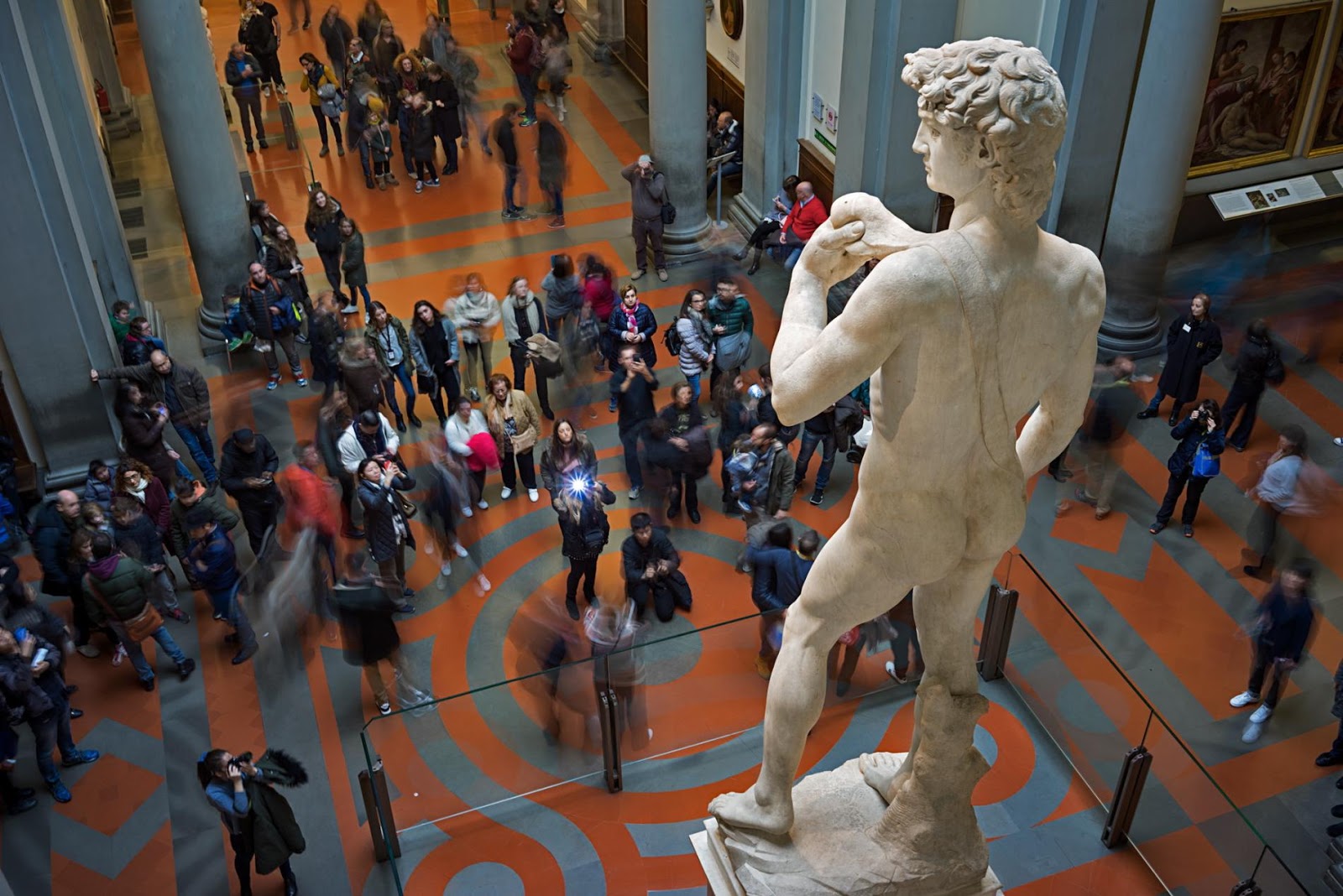
Michelangelo's David. Photo by Paolo Woods (NG) May 17


The article talks about the creation of the IQ test, and how it was conceived as a way of understanding genius.  People who had high IQs were followed for years, and it turned out - they had the same outcomes as most people.  Out of their control group, 2 had gone on to some fame in their field, but the rest struggled like... well, the rest of us. So high IQ doesn't mean that a person will achieve great success, but it arguably "sets the table" for someone to achieve that label.

The article talked about Michelangelo's genius, and compared how some famous geniuses had a "circle of genius friends" who were also very talented, and they had charts and maps of how by charting "social networks" of genius, there might be clues as to how and why they accomplished so much.  

They repeated the myth that Michelangelo took a "discarded piece of marble" and crafted the David from it. Actually, as I learned while researching "the Demedicis" for HBO, Mick won the marble in a contest.  His father had notified him in Rome this monster piece was being offered in a contest, and convinced the 25 year old to enter. Mick found a flaw in the marble, which would have made it worthless - but he followed the fault with his chisel to start the knee of this statue.  

For those familiar with his technique, he "let the person emerge" from the marble - honing small details first, knowing precisely how they would work in the overall piece. In other words he "saw the statue inside the marble" before he began.

Most sculptors work "outside in" - shaping as they go along, chipping away what wasn't necessary, but in Mick's case, he did the opposite.  Revealed the statue within. 

They also miss out on the point that Lorenzo De Medici, 20 at the time, met Michelangelo when he was 11 and a student of the Academy.  Lorenzo saw his genius, brought him into his home, and allowed him to flourish amid their "Platonic Academy" where they would read Plato (many for the first time) in Italian (Lorenzo's father Piero had them transcribed from Latin to the local language so anyone could read Plato and Socrates) - and not just those books okay'd by the Vatican. This is why the Pope sent an assassin to kill Lorenzo and his brother Giuliano (the model in Botticelli's "Primavera") but that's another story...)


Mick's patron, a poet turned ruler Lorenzo

The article points to this ability in geniuses.  

Seeing things from a different perspective.  Being able to "see a building" in 3 dimensions - or as Nick Tesla revealed that he "saw his inventions as fully functioning objects in his mind" before he went to a prototype. 

Beethoven credited his genius not with the other artists he knew, or his circle of friends, or his "social network."  He firmly credited it with coming from "the outer spheres" - E. T. A. Hoffmann, the author and music critic: "Beethoven is the "sublimest" of composers: his music "opens the realm of the colossal and immeasurable," and "leads the listener away into the wonderful spiritual realm of the infinite."

Beethoven said as much about his inspiration.  It came from the outer realms - he was not a religious man in the Age of Reason, but claimed that the source of his inspiration came from "beyond our realm." 

He was accessing the Flipside in order to download his music.

But the point of this Martini Shot essay is to open up a new avenue to understanding "genius."

If what thousands have said in this research is accurate: that we use consciousness the way a computer uses hard drives, that a portion of our consciousness is "always back home" while we are here - if it's true that we "only bring about a third of our conscious energy to a lifetime" and that "roughly two thirds is always "back home" while we are on the planet" - then we have to redefine what genius actually is.

Because science is married to the concept that consciousness is dependent upon genetics and sociological factors, and the brain is like a computer that is filled with information, and then "for some inexplicable reason" uses that information to make us believe we are conscious. (In a Martini nutshell)


That's an unfortunate way to view life on earth - but it's pretty much what science thinks is the case.

That "the brain is the sole creator of thought."  That If we slice up the brain we'll find out how the brain works.

There's a photograph in the article of the slices of Einstein's brain that they carved up, put on slides, and is on display at the National Museum of Health and Medicine in Maryland


Slices of Einstein's Brain 
So what the heck are slices of Einstein's brain doing in a museum?

It's like taking apart a stereo receiver to figure out why Beethoven's Ninth is playing inside of it.  Or taking apart a speaker to examine why music is coming from inside.  Or looking for the tiny man in the operator suit who is hiding inside the machine.


Oh look. A slice of Einstein's actual brain.

Post materialist scientists (like Dr. Greyson at UVA) claim the brain functions like a stereo or television receiver. That is uses limiters and filters to parse information into where it is needed or can be used.

They claim the brain functions like a receiver of consciousness, that it is not the only source of consciousness, since people have yet to wrap their brain around this research - And until we do, we will forever be slicing up brains thinking that's the source of consciousness.  Or that's the only place to find it.

As the research shows, the brain is not the only source of consciousness. By "research" I'm citing clinical psychologist Dr. Helen Wambach's 2000 cases of people under hypnosis claiming that we "plan our lifetime" that we are consciously aware of what or who we are going to be prior to coming to the planet, or a decade later psychologist Michael Newton's 7000 cases (a decade later) where people consistently claim that we come to the planet "around the 4th month of inception" and that we exist prior to coming here, that the majority of our conscious energy ("soul") remains behind or "back home" while we are here, and is accessible in "outside consciousness events" (NDEs, OBEs, LBLs, etc)....

Or by citing Dr. Bruce Greyson's youtube talk "Is Consciousness Produced by the Brain?" which I reproduce in "It's a Wonderful Afterlife."  He argues with medical cases that consciousness is "not only produced by the brain." (Go ahead, click the link, it's only 90 minutes; I'll wait.)

I'm also including the 45 hypnosis sessions I've filmed (4-6 hours each) and the 5 that I've done myself.

"Consciousness is NOT confined to the brain."  

It's funny. This sentence upsets some people.  They argue "the reason people "believe in the afterlife" is because they "fear death, they fear annihilation." I would argue the opposite. The "belief" that life ends is the issue. That the word "believe" is the culprit. If you've experienced something (NDE, OBE, LBL) "belief" becomes "experience." Either one experiences it or does not.  

In terms of NDEs, thousands claim they "know" that life goes on, in LBL (between life hypnosis) sessions, people "experience" "returning home" after this lifetime. ("Home" is their word).  
By "home" they don't mean here.

The point is; eyewitness reports should not engender fear or disbelief, but rather a desire to understand where they come from and if evidence shows they could not have made it up or learned it elsewhere to examine the consistency in those reports. 

If we can prove there is "new information" during the event, (as I do in my books) then it can't be coming from the brain.  New information can't be cryptomnesia, synesthesia or hypoxia.  If the information turns out to be accurate, then the experience therefore cannot be created by the brain.

The brain functions like a stereo receiver, with limiters, filters and ways of parsing that information where it should go.


Oh look, here's  how I parse information I get from the Flipside.

We can access our "higher consciousness" through hypnosis, meditation, out of body experiences, near death events. When we do so we get a glimpse of the amount of information that we have access to.

People claim that we have "portable hard drives" that follow us around in the shape of geometric fractals that "contain all the information from our previous lifetimes."  ("Flipside") 

It's not my theory that occurs, or my belief that's the case, but is what people consistently report.  Not all the time - but enough times that I can argue what these geometric shapes supposedly contain.

"Access codes."


The Beethoven's Ninth is hiding an Access Code. Listen to it in its entirety and you'll see what I mean. (I'm kidding but kind of not kidding.)

Not literally, figuratively. 

Access to our "higher consciousness" which does not float around the universe like a Carl Jungian pool of consciousness - it would be cool if that was the case, but that's in none of the reports.  What is in the reports is the consistent claim that we are unique - we have our own consciousness that is ours, but by the nature of how consciousness works - we can shift our perspective, experience other people's experiences, or tap into the vast feelings of love that connect us all.

So genius - isn't confined to the brain.

It does have a "social network" in the sense that we seek out, in a quantum entanglement fashion, the people and loved ones that we normally incarnate with.  That we've already made a plan with to reconnect with again in this lifetime. That we find ourselves running into and feeling "as if we've known them forever."

Because, in a sense, we have.  We've known them "before" and continue work and hang out with them again.


Another fellow who seemed to have access to multiple lives
When we come here we choose a lifetime that we think we can handle.  When we are here, there are environmental aspects that are conducive to helping us achieve our goals. (In the article they cite how rappers and other musicians are able to "supress pathways" or "open pathways" that allow them to access spatial information we aren't normally aware of.)

So - it is possible for a person to "open up those pathways" to access more information?


Meditation allows the brain to "work out" like an athlete would to get certain muscles to function better.  Meditation can open the mind up to other possibilities.

Reading about others journey or path can open our mind up to these possibilities.  I know when I first began reading Michael Newton's work, I avoided his conclusions about what happening and focused just on the first hand reports.  Later, after I confirmed beyond my ability to deny what they were saying was accurate, I went back and read his comments about what people were telling him.


Hmm. Space. The first frontier.

Finding a Newton Institute trained therapist and doing a between life session will grant access to that "higher information." (I recommend them because they are familiar with the architecture of the flipside, and know what questions to ask. They have a searchable database on their site.)

Indeed, doing a between life session led me to the other research, to interviewing people who've had near death events, or people who've had contact with loved ones either through dreams or a medium or some other fashion - to see if the portrait or the architecture of the "afterlife" was the same.

Indeed, to my chagrin, it was.


Flipside. It's a Wonderful Afterlife. Hacking the Afterlife.

The architecture of the afterlife is a knowable entity.  Reportedly we don't bring "all of our consciousness" to a lifetime because it would "blow the circuits of the brain" with "too much energy."  (And we do see people walking around the planet with blown circuits as it is.)

But we can access this information in such a way as to not harm our path and journey, and in such a way that we can gain insight into why and how we came to the planet, and what happens to us when we depart it.  (In a spiritual sense.)

But in the future, we won't be slicing up people's brains to understand why they worked. It's like taking apart a tennis shoe  to understand why a runner is so fast. Or taking apart a car to understand how it can win so many races. Certainly the construction of the tool is important, and the ability to use it with ease is important.  But equally important is the pilot, the person running the race or driving the car, who brings their skill and ability to that particular task, and further, they're bringing the ability to access "all their other lifetimes" or to think in a spatial way that is "open to the answer no matter where it comes from."
E equals what again?

Hence why Einstein used to play his violin in order to think.

It wasn't because it was a casual thing to do. It's because he was using music as a way of linking up with the flipside and downloading the answers.


You're welcome.


What Is Life Between Life Hypnotherapy?

GoodReads